


Cart 0
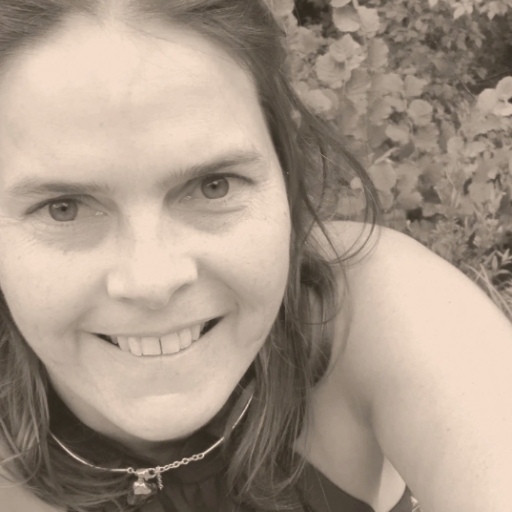
Can you introduce yourself in a few words?
A former self-employed midwife, I put down my medical apron long ago to put on another one… At 18, I already imagined myself working with earth and wood in my own studio—a dream I never stopped nurturing. In 2008, I began training in wood sculpture in the Jura, which I continued over the years through repeated courses in clay work in various Belgian and French workshops. I have an ongoing thirst to absorb diverse techniques, each of which eventually becomes part of a personal, embodied know-how.
In 2016, I decided to open a studio in Belgium, and three years later, another one in Granges-sur-Baume, in the Jura.
My materials of choice are wood and stoneware, which I combine with glazes.
I work these materials through inspirations rooted in memory and in my former life as a midwife—memories connected to femininity, bodies, the richness of curves, hidden meanings, and sometimes the secret, precious intimacy they contain.
On one hand, I am inspired by the Jurassic landscape of my village, which overlooks a cirque (locally, a cirque refers to a landscape enclosed by cliffs) and by the intimacy these cliffs can hold—an unfathomable intimacy…
On the other hand, I enjoy reconnecting spontaneously and naturally with the images my memory has collected: bodies, curves, mystery, and the awe contained within humanity.
My hands probably connect to this precious memory without always seeking to control it.
Linking these vast and powerful themes of life to the living nature around us—transposing them, imagining them, and submitting them to my imagination and personal wanderings—deeply moves me.
Being sensitive to the viewer’s gaze, to the awakening of their curiosity, and sometimes daring to share impressions and feelings with them is an incredible richness. Hoping to secretly spark a reaction—whatever it may be—fills me, nourishes me, excites me, and pushes me to invent what comes next.
My art is therefore deliberately abstract, in order to awaken the imagination and invite inner journeys.
Wood and/or sculpted earth can loosely evoke rocks intertwining—just as bodies can intertwine, entangle, fit together, strengthen one another, unite, or cling to each other.
Sculpting clay, carving wood—two materials and two ways of working that are completely opposed…
And with stoneware, I merge glazes born from my own research.
My intention is to leave a personal imprint. If color is used, it is chosen according to my sensitivity at that moment.
What is your story with L’Établisienne?
With Benoît Jaillet—sculptor and trainer, who trained me in wood sculpture and drawing—we were looking for an atypical place that could host our so-called “right-brain” drawing workshops.
That’s how I came across L’Établisienne’s website, which immediately felt right—particularly because of our shared affinity for woodwork, the smell of workshops and freshly cut shavings, but also because of the unique atmosphere of this former plumber’s workshop. Everything there seems carefully sourced, full of character, looking for a new life, and it’s a place where you’re happy to wander from room to room.
And, as a Belgian—very modestly—Paris still carries the emblematic aura of the “City of Light,” where legend has it that simply being there is already a mark of glory!
What do you do there?
In collaboration with Benoît Jaillet, I lead Module 1 (a 3-day course) of our two-module program for learning to draw using the so-called right-brain approach.
This drawing method, developed years ago by the American Betty Edwards, shows that drawing is not a matter of gift or talent. We are all capable of producing accurate, personal lines that reflect what our eyes truly see. Unfortunately, many of us were stopped early in our learning by a model that pushed us to represent things symbolically and in a standardized way—just as we all share the same spoken language or calculation system.
The modules we’ve adapted to our own aspirations and goals are open to anyone who wants to (re)discover drawing, who believes they can’t draw, or who feels their drawings are unfinished without knowing why.
No prerequisites are needed other than the desire to discover and learn—and we guarantee impressive results for everyone!
All it takes is to push the door open and let yourself be carried away by moments of pure visual pleasure and deep personal satisfaction.
Your favorite material?
I still carry a very “natural and wild” part of my childhood: the smell of earth from my mother’s vegetable garden and the smell of freshly cut wood in my father’s workshop.
These two materials remain my favorites, even though they are worked in completely opposite ways—one by removing material, the other mainly by adding it.
My curiosity remains wide awake, and I still plan to incorporate glass and steel into my work.
Your favourite tool?
As a woman and former midwife, my favorite tool is—and always will be—my hands: the hands that touch, feel, sense, and perceive, but also those that give, shape, and soften.
Your favourite gesture?
Without hesitation: caressing the material—the firm caress that shapes it, followed by the gentler one that refines and finishes it.